
Now Available: Order Our Most Popular Products Online at Our Best Prices, On Your Schedule @ xPress.ink


Most local businesses don't have a mailing list problem. They have a "nobody around here knows we exist" problem.
That's the problem Every Door Direct Mail was built for. EDDM is a USPS program that lets you mail a postcard to every home on a postal route — no mailing list, no addresses, no permit — at the lowest postage rate the Post Office offers. You pick the neighborhoods. USPS delivers to every door.
It's simple, it's cheap, and it's not right for everyone. So how do you tell if it's right for you? That's what the rest of this is for.
What EDDM Actually Does
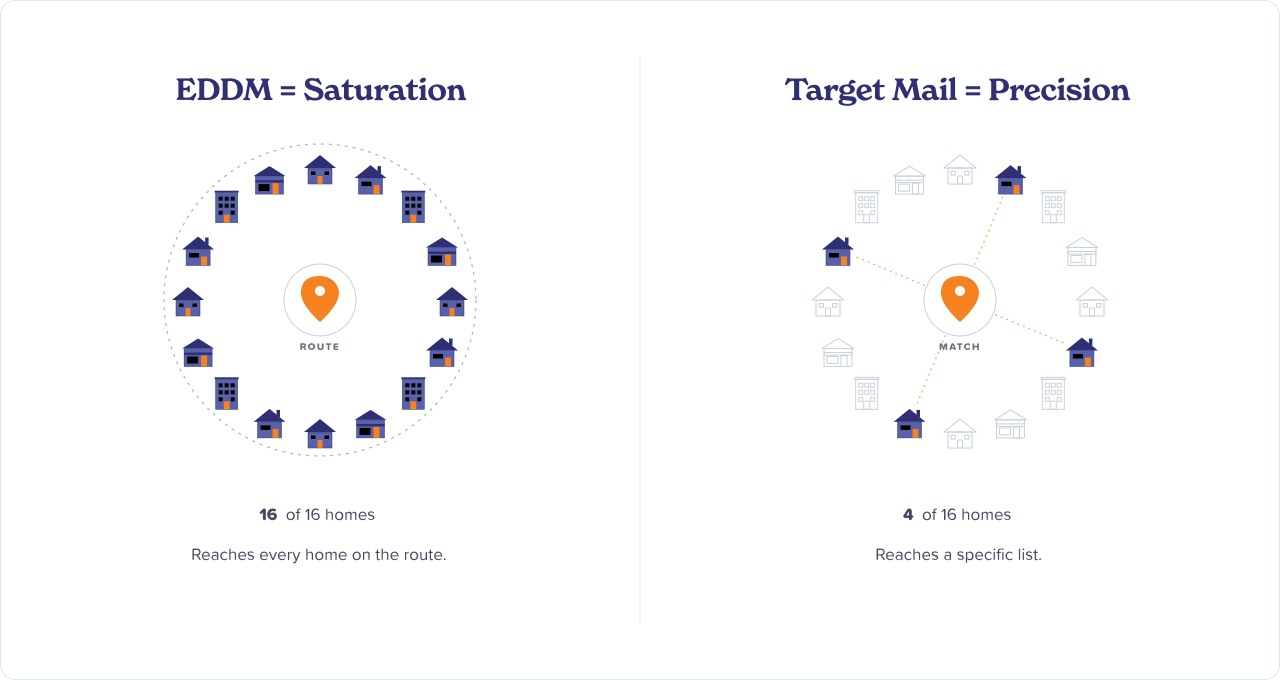
Strip away the acronym and EDDM does one thing: it saturates an area.
Pick a carrier route — a slice of a neighborhood, anywhere from a few hundred to a couple thousand homes — and every mailbox on it gets your piece. Not a sample. Not a targeted slice. Every door.
You're not buying a list. You're buying coverage. And because the mail goes out unaddressed — the address line just reads "Local Postal Customer" — you skip the cost of renting a list, processing data, and addressing each piece. That's why the postage runs around a quarter a piece instead of the going first-class rate.
The One Question That Decides It: Saturation or Targeting?
Here's the honest fork — and it's the whole decision.
EDDM is a saturation tool. It reaches everyone in an area, which is exactly what you want if your customers are simply "people who live nearby." A pizza shop wants every household in delivery range to know it exists. A new dentist wants the whole neighborhood to see they've opened. A roofer wants the zip code to recognize the name when a storm rolls through. None of them care whether a given house earns $80k or $180k — they care that it's close.
But if you have to reach a specific kind of person — homeowners with a pool, donors who gave last year, businesses over a certain size — EDDM can't do that. It has no individual-level targeting. For that, you want targeted direct mail, which uses a real list and trades the rock-bottom saturation rate for precision.
So the question isn't "is EDDM good?" It's: do you want everyone in an area, or a specific someone? If it's everyone, EDDM is built for you. If it's a specific someone, it isn't.
Who EDDM Tends to Fit
In practice, the businesses that get the most out of EDDM are the ones whose customers come from the surrounding area:
- Restaurants, cafes, and food trucks announcing a location or running a coupon
- Home services — HVAC, plumbing, lawn care, pest control — building name recognition route by route
- Retail, grocery, or gyms promoting a grand opening or a seasonal sale/offer
- Dentists, chiropractors, and clinics introducing themselves to a neighborhood
- Real estate agents farming a zip code with "just listed / just sold" cards
The thread: their next customer is probably someone who already drives past them. EDDM just makes sure that person knows the business is there.
Ready to run an EDDM campaign?
Start planning your campaign — we're with you from design to doorstep.
EDDM Isn't Only for Postcards
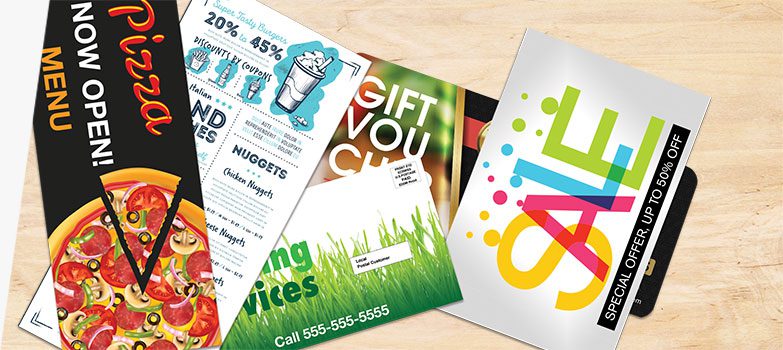
The oversized postcard is the classic EDDM piece, and for good reason — a 9"×12" card doesn't get sorted into the stack, it is the stack. But the program is more flexible than most people realize, and some of the best uses aren't postcards at all.
Here are a few real-world examples from our experience:
- Neighborhood newsletters — 8-to-12-page pieces for Texas HOAs that often cost the association nothing, because they sell the ad space to local real estate agents, insurers, and home-service companies.
- Hyperlocal magazines — the "Westlake Hills Edition" model: a small publisher fills a magazine with neighborhood content and sells the ads around it.
- Nonprofit fundraising — a local volunteer fire department sends a fundraising appeal letter in an oversized envelope to their service areas.
- Community papers — something like Community Impact, the Austin-founded paper that mails monthly hyperlocal editions to whole swaths of the city. No subscriptions, just every door.
- Shared mail — one real estate agent farms a 12,000-home zip code with a big 9"×12" card every month, and it often costs her nothing. Her listings go on the back; the front carries ads from a plumber, an HVAC company, and a mortgage broker, who cover her postage and printing. People keep the card for the offers — and when they're ready to sell, they already know who to call.
The point: EDDM can be a postcard. It can also be a publication, a community paper, or a self-funding ad platform. What could it be for you?
The Honest Pros and Cons
Where EDDM wins:
- The cheapest postage USPS offers — and no list to rent or clean
- Big formats that physically stand out in the mailbox
- Simple to launch — you pick routes on a map, we handle print, prep, and the postal drop
- Hard to beat for blanketing a local area
- Eligible for nonprofit postage rates
Where it falls short:
- Limited demographic targeting — you take the whole route or none of it (although the USPS does provide average income, household size, and age data for each route)
- The wrong tool for niche or luxury audiences scattered across a city
- Like any channel, the result still rides on your offer, your design, and your timing
EDDM is a strong tool. It isn't a silver bullet. A saturation mailer with a weak offer just saturates a neighborhood with a weak offer.
The Bottom Line
EDDM is right for you if your goal is for an entire area to know you exist — and if your customers are defined more by where they live than by who they are.
It's the wrong tool if you have to reach a specific, scattered type of person. That's a job for a targeted list.
Most local businesses land in the first camp. If that's you, the only questions left are which routes to hit — and what a run actually costs.
Frequently Asked Questions About EDDM
What is Every Door Direct Mail (EDDM)?
Every Door Direct Mail is a USPS program that lets businesses send mail to every address on a postal route without a mailing list or permit. It's the most affordable way to blanket a local area.
Do I need a mailing list to use EDDM?
No — that's the core advantage. Instead of a list, you choose the postal carrier routes you want to cover, and every home on them receives your piece.
Who should use EDDM?
Local businesses whose customers come from the surrounding area — restaurants, home services, retail, clinics, real estate agents — and anyone who wants a whole neighborhood or zip code to know they exist.
Can I target specific demographics with EDDM?
No. EDDM covers every home on a route, so you can't filter by income, age, or interests (although the USPS does provide average age and income data for each route). You can exclude business addresses and choose routes that match your area. If you need finer precision than that, targeted direct mail is the better fit.
Ready to run an EDDM campaign?
Start planning your campaign — we're with you from design to doorstep.

